Roof repair or replace: how to decide in Kenosha, WI
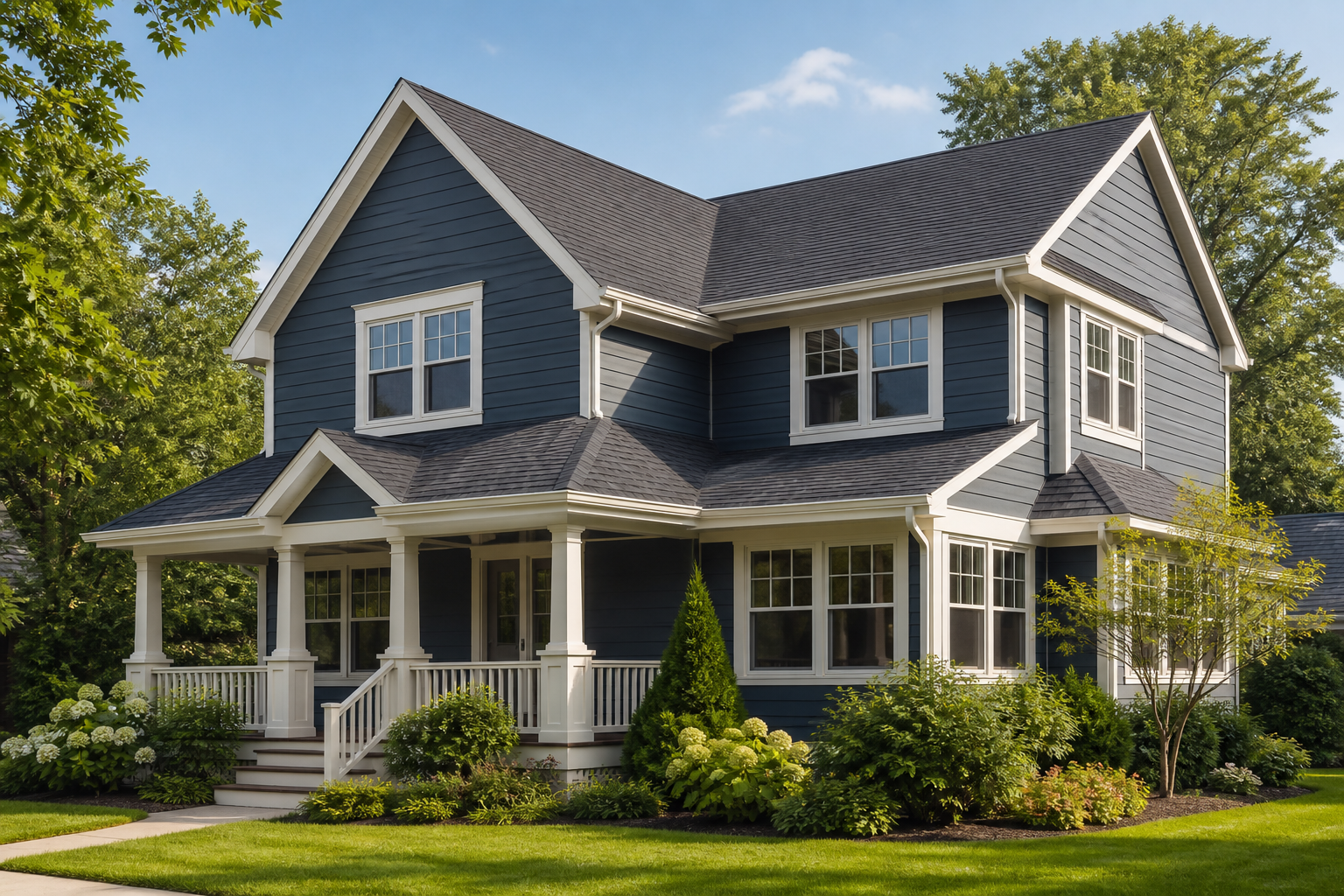
Deciding whether to repair or replace your roof in Kenosha, WI usually comes down to three things: how old the roof is, how much of it is actually damaged, and whether a storm did the damage. If a spring hailstorm or a summer straight-line wind event tore up your shingles, you are not just asking a maintenance question. You are asking whether to patch a section, replace the whole roof, and whether your insurance should be paying for it. This guide walks through how to make that call the way a registered, insured contractor would on-site, and what to check before you sign anything.
Vision Quest 11:11 LLC is a locally owned general contractor serving Kenosha and the surrounding Kenosha County communities within about 25 miles. We offer free estimates, and on storm work we document the damage the way an adjuster needs to see it. If you already know your roof took a hit, a storm damage roof inspection and insurance claim is the fastest way to a clear answer.
Is it better to patch a roof or replace it?
Patch a roof when the damage is isolated, the shingles are less than about 12 to 15 years old, and the deck underneath is dry and solid. A few lifted or cracked shingles from one wind gust, a single leak around a boot or flashing, or a small area over a valley: those are repairs, not replacements. Repairs are faster and cheaper, and there is no reason to tear off a roof that has years of life left in most of its surface.
Replace the roof when the problems are systemic instead of local. That is what many Kenosha homeowners run into after a serious hail or wind event.
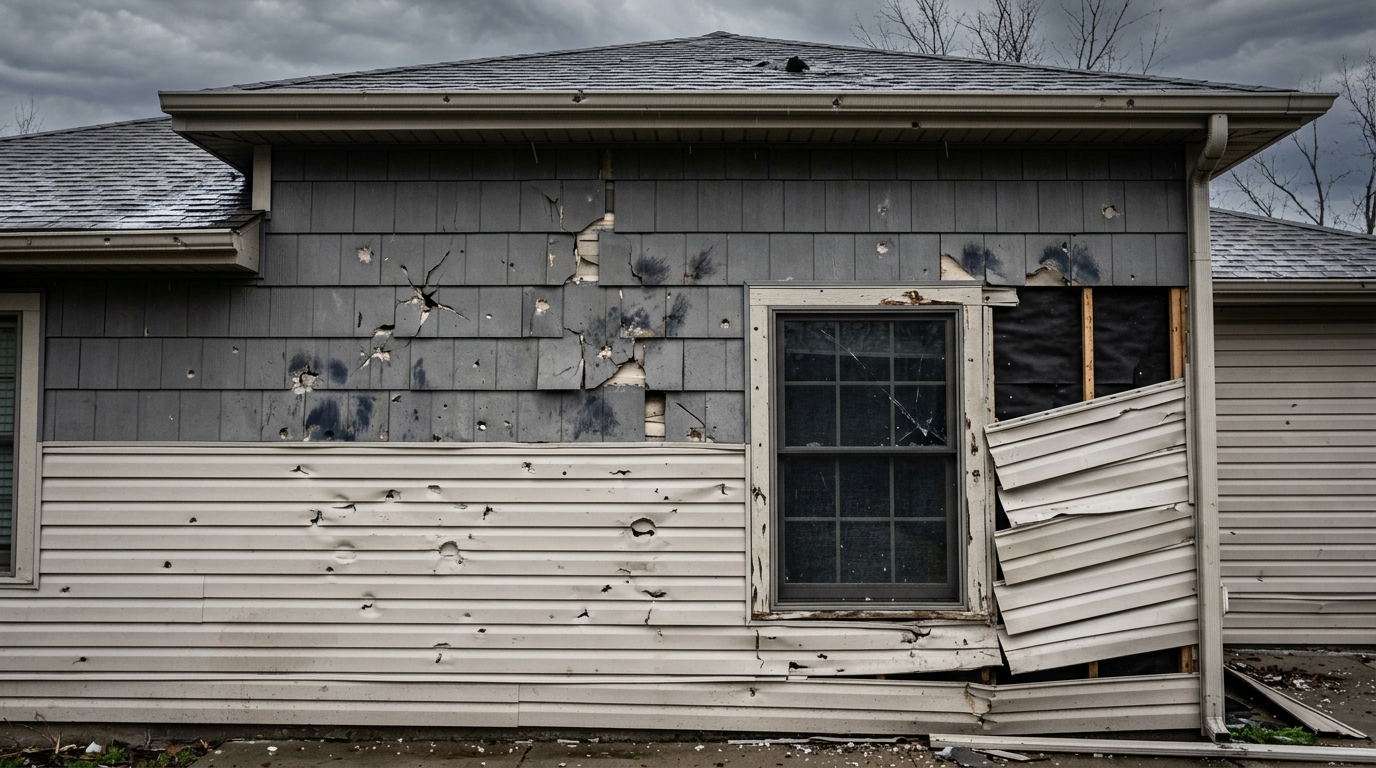
- Widespread hail bruising. Hail rarely hits one clean patch. It bruises shingles across whole slopes, knocking off the protective granules. You often cannot see it clearly from the ground, which is exactly why bruising gets missed until leaks start.
- Age plus damage. A 20-year-old asphalt roof that just took storm damage is usually a replacement. Patching an old roof next to fresh shingles rarely blends, and the old sections keep failing.
- Repeat leaks. If you have patched the same area twice and it still leaks, the deck or underlayment is likely compromised. That is a tear-off, not a third patch.
- Deck rot. Once water has been sitting under the shingles long enough to soften the sheathing, spot repairs will not hold. The wet decking has to come out.
When you are on the fence, the honest test is whether a repair buys you real years or just delays the inevitable. If it delays, you are spending twice.
What is the 25% rule for roofing?
The 25% rule is a common contractor and insurance guideline: if roughly a quarter or more of the roof is damaged, replacement usually makes more sense than repair. Below that threshold, targeted repairs are often the smarter spend. It is a rule of thumb, not a code requirement, but it is a useful gut check before you commit to a full tear-off.
The logic is straightforward. Once damage crosses about 25% of the surface, the cost of chasing repairs across that much area starts to approach the cost of a new roof, and you still end up with an aging roof full of patched sections that age unevenly. At that point a clean replacement gives you a uniform, warrantied roof instead of a quilt of repairs.
The 25% rule is a starting point, not a verdict. A 30-year-old roof at 15% damage can still be a replacement, and a 5-year-old roof at 30% damage in one hail-struck slope can sometimes be handled as a large repair. Age and deck condition break the tie.
Some building codes also cap how much of an existing roof can be repaired or overlaid before a full replacement is required. Your contractor should know the local threshold and factor it in rather than surprising you mid-project.
Is $30,000 too much for a roof?
For a typical single-family home in the Kenosha area, $30,000 is on the high end for a standard asphalt shingle roof, though it is not automatically unreasonable. What pushes a roof toward that number is size, pitch, complexity, material, and how much decking has to be replaced once the old roof comes off. A large home with a steep, cut-up roofline and premium shingles costs far more than a small ranch with a simple gable.
Here is what actually moves the price, so you can read a quote instead of just reacting to the total:
- Square footage and pitch. More surface and steeper slopes mean more material, more labor, and more safety setup.
- Material choice. Standard architectural asphalt sits at one price tier. Premium, impact-rated, metal, or specialty products cost considerably more.
- Layers and tear-off. Removing multiple old layers and hauling them off adds labor and disposal cost.
- Hidden deck damage. Rotted or storm-soaked sheathing found during tear-off has to be replaced. This is the most common reason a real bill lands above the estimate.
- Flashing, vents, and details. Chimneys, skylights, valleys, and complex flashing all add cost and are where cheap roofs leak first.
A quote that seems high is not automatically a bad deal, and the cheapest quote is not automatically a good one. The dangerous quotes are the vague ones. If a bid does not spell out material, tear-off, decking allowance, and flashing work, you cannot tell what you are actually buying.
How do I know if my roof needs repair or replacement?
Start with a real inspection, not a guess from the driveway. The clearest signals that you are past repair territory: shingles missing across multiple slopes, bald spots where the granules are gone, daylight or active leaks in the attic, sagging rooflines, and shingle debris or granules collecting in your gutters after a storm. Any one of those on an older roof usually points to replacement.
After a storm, the timeline matters more than most homeowners realize. Water that gets under damaged shingles works into the deck and insulation quickly, and a small storm gap can turn into mold and rot in a matter of days. Waiting to see if it leaks is the expensive way to find out.
When you probably do NOT need a new roof yet
We would rather tell you the truth than sell you a roof you do not need. If your roof is under about 10 years old, has no storm damage, and the only issue is one loose shingle or a single flashing detail, you do not need a replacement. That is a repair, and a good one will last. If a contractor inspects a young, undamaged roof and immediately pushes a full tear-off, get a second opinion. Sometimes the right answer is to do nothing yet and simply keep an eye on it after the next big storm.
Storm damage changes the whole equation
If your roof took hail or wind damage, the question is not only repair or replace: it is who pays. Storm damage is often a covered insurance claim, and the difference between a denied claim and an approved one usually comes down to documentation. We inspect for storm damage, photograph it the way an adjuster needs to see it, and can walk the roof with your adjuster so nothing legitimate gets missed. When the damage warrants a full roof replacement in Kenosha, WI, we handle the tear-off, decking, and reroof as one coordinated job, and we can address matching siding and gutter damage at the same time so the whole storm claim is handled together.
Get a straight answer on your Kenosha roof
You do not have to figure out repair versus replace on your own. The fastest path is a free roof inspection: we look at the whole roof, tell you honestly whether it is a repair or a replacement, and if it is storm-related, we document it for your insurance claim before anything gets covered up.
Call Vision Quest 11:11 LLC at (414) 312-1016 or request a free roof inspection online. We are a registered Wisconsin LLC and insured, we serve Kenosha and Kenosha County communities within about 25 miles, and you will get a clear, written answer before you spend a dollar.